

The Hidden Weight That Makes MS Harder
Our Voyage with MS
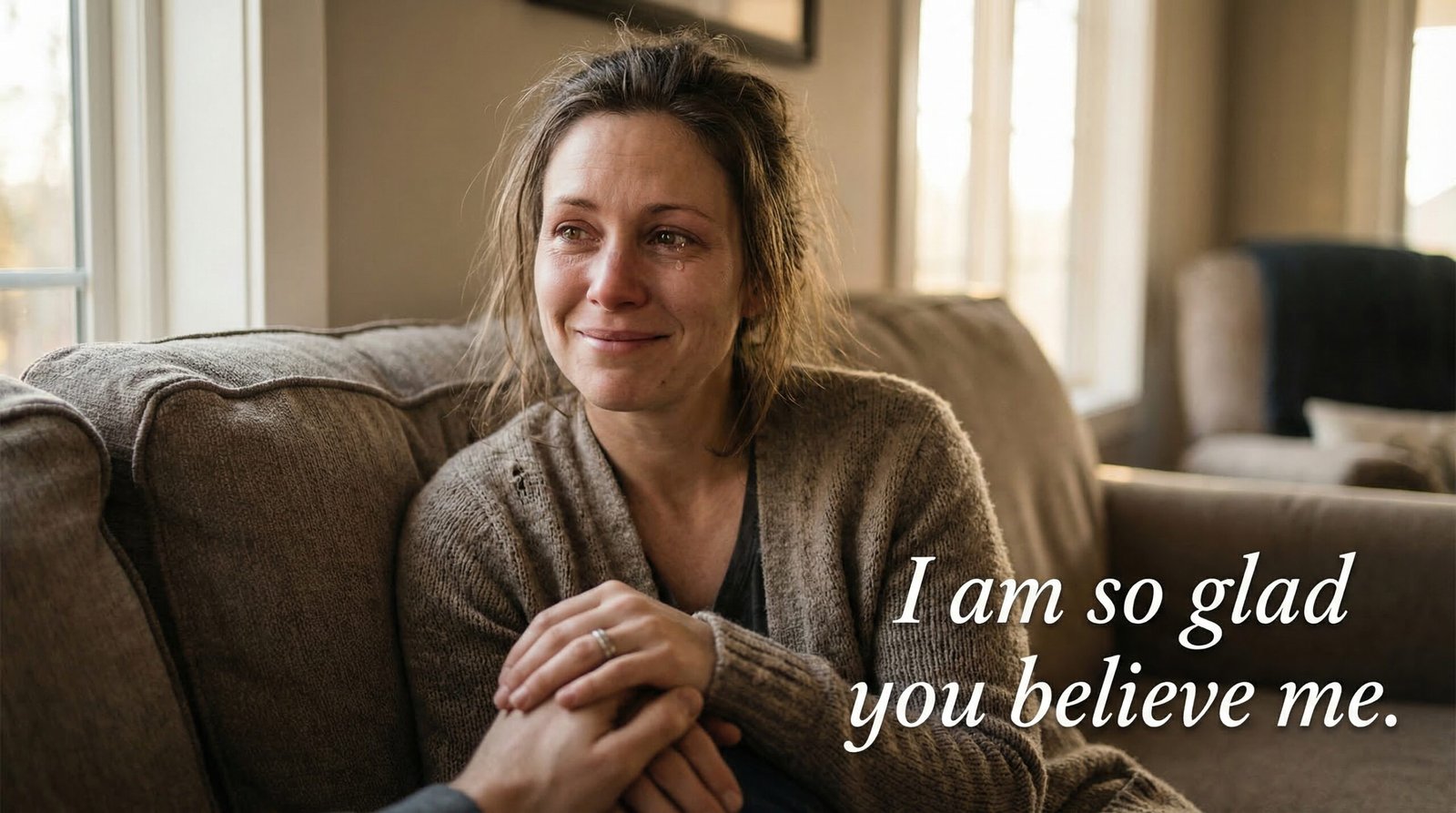
I am so glad you believe me.
Six words. Spoken quietly. Her legs were hurting, and I was giving her a massage, and that is what came out.
Not thank you. Not I love you. I am so glad you believe me.
And I think half the pain left with those words. Not because of the massage. Because of what the massage represented. Someone tending to her. Believing her. Listening without needing proof. I am convinced that did more for the pain that night than anything my hands were doing.
I have thought about those words every day since. Because what she was really saying is that she has spent a long time not being believed. And that weight, that constant low-level fear of not being believed, has been part of her MS story since before she even had a diagnosis.
When the Diagnosis Changed Everything and Nothing
Charlene was diagnosed with MS in January 2006. Twenty-four lesions. A name for everything that had been happening to her body for years.
Here is what nobody tells you about the moment you finally get a diagnosis. The world does not suddenly believe you. Sometimes it believes you less.
Before the diagnosis, she was hiding. She had learned to hide. Symptoms tucked away. Struggles minimized. I am fine on repeat. And then the diagnosis arrived, and suddenly she had permission to stop hiding. She stopped pretending. The symptoms she had been masking for years were finally allowed to exist out loud.
So she thought.
And the people around her saw someone who seemed fine yesterday, suddenly showing symptoms today. And some of them drew the wrong conclusion entirely.
Attention seeking. Exaggerating. Playing it up.
She went from hiding everything to finally being seen, and what some people saw was a performance.
Even I had a week where I was not sure what to make of it. I will be honest about that. A week. And then I started paying attention, really paying attention, and I understood. But that week existed. And for some people in her life, that week never ended.
This Is Not Just Her Story
I need to be honest about where this section comes from. I told Charlene that the emotional weight of not being believed was making her symptoms worse. That the worry, the hiding, the constant low-level fear of being dismissed, was adding to the pain, emotional pain. I said it because I had watched it happen. But I also knew she needed more than my opinion.
So I did what I do. I went looking. I am a bit of a research geek, and I wanted proof. Not because I doubted what I was seeing, but because I wanted her to know I was not making it up either.
I found it. And I want to share it here because every person with MS and every caregiver deserves to know this exists.
A study led by Professor Gavin Giovannoni found that 88 percent of people with MS reported experiencing medical gaslighting. Their symptoms were dismissed as stress, anxiety, or normal aging. Their reality was questioned by the very people who were supposed to help them understand it. 88 percent. That is not an outlier. That is almost everyone in the room.
Women are significantly more likely to have their symptoms dismissed than men. And disbelief is most common during the prodromal phase, the time before a formal diagnosis, when symptoms are vague but already debilitating. That is exactly where Charlene was for years. Symptomatic, struggling, and surrounded by people who could not see what she was carrying.
Research also shows that the invisible MS symptoms, fatigue, brain fog, and neuropathic pain, are actually stronger predictors of health distress than visible symptoms. They are also the symptoms most likely to be met with skepticism. The things that hurt her most are the things nobody can see.
When I showed Charlene what I found, she did not say much. She did not have to. This was her proof, too.
The Weight That Makes the Symptoms Worse
Here is what I figured out by watching her. And I want every caregiver and every person with MS to read this carefully.
Not being believed does not just hurt. It costs energy. And energy is the one thing MS already steals every single day.
Every time she wonders whether someone believes her, the battery drains. Every time she has to decide whether to speak up or stay quiet because she is not sure how it will land, the battery drains. Every time she performs wellness, she does not feel it because it is easier than explaining herself again, and the battery drains. The emotional weight of not being believed is not separate from the disease. It feeds it.
Research confirms what I observed at home. Studies on social support and MS fatigue show a direct correlation. Patients with lower perceived support and higher levels of invalidation report significantly higher levels of fatigue and physical pain. The stress of constant self-advocacy triggers the body’s stress response, which can worsen inflammatory processes.
She is not just fighting MS. She is fighting MS while simultaneously managing the emotional load of a world that does not fully believe MS is what it is. That second fight is exhausting in a way that never shows up on an MRI. And it makes the first fight harder.
That is the vicious circle. The hiding costs energy. The not being believed costs energy. The worrying about whether she will be believed costs energy. And the less energy she has, the worse the symptoms get. And the worse the symptoms get, the more she has to explain herself. And the more she has to explain herself, the more she worries about not being believed.
Nobody talks about this part. And it might be the most important part.
What Breaking the Circle Looks Like
I am not going to pretend I got this right from day one. I told you about my week. I had to learn to pay attention in a different way. To watch for the signs she was not going to tell me about. To ask the right questions. To stop waiting for her to say she needed help and start noticing before she had to ask.
But here is what I know now. When she does not have to spend energy wondering whether I believe her, that energy goes somewhere else. It goes toward managing the day. Toward doing something she loves. Toward being present instead of performing.
Belief is not passive. It is not just nodding along. It is showing up in a way that makes the question unnecessary. It is making the environment safe enough that she never has to wonder.
And one quiet night, giving her a massage while her legs were hurting, she said it out loud. Six words she had probably needed to say for twenty years.
I am so glad you believe me.
To Everyone Who Recognizes This
If you are living with MS and you have spent years wondering whether the people around you really believe what you are telling them, we want you to know something.
What you are experiencing is real. The symptoms are real. The exhaustion is real. The emotional weight of not being believed is real, and the research is very clear that it is making the physical reality harder. You are not imagining that. You are not being dramatic. You are carrying something invisible in a world that too often only believes what it can see.
If you are a caregiver and you are reading this, the most important thing you can do is not complicated. Just believe them. Before they have to ask. Before they have to prove it. Just believe them. You have no idea what that does for the battery.
It is a heavy cycle to break. But you are not imagining it. The research says so. And that research belongs to you.
Let’s see the world, one charge cycle at a time. 🧡⚡