

Respite Care: What It Is, Who It’s For, and Why No One Talks About It
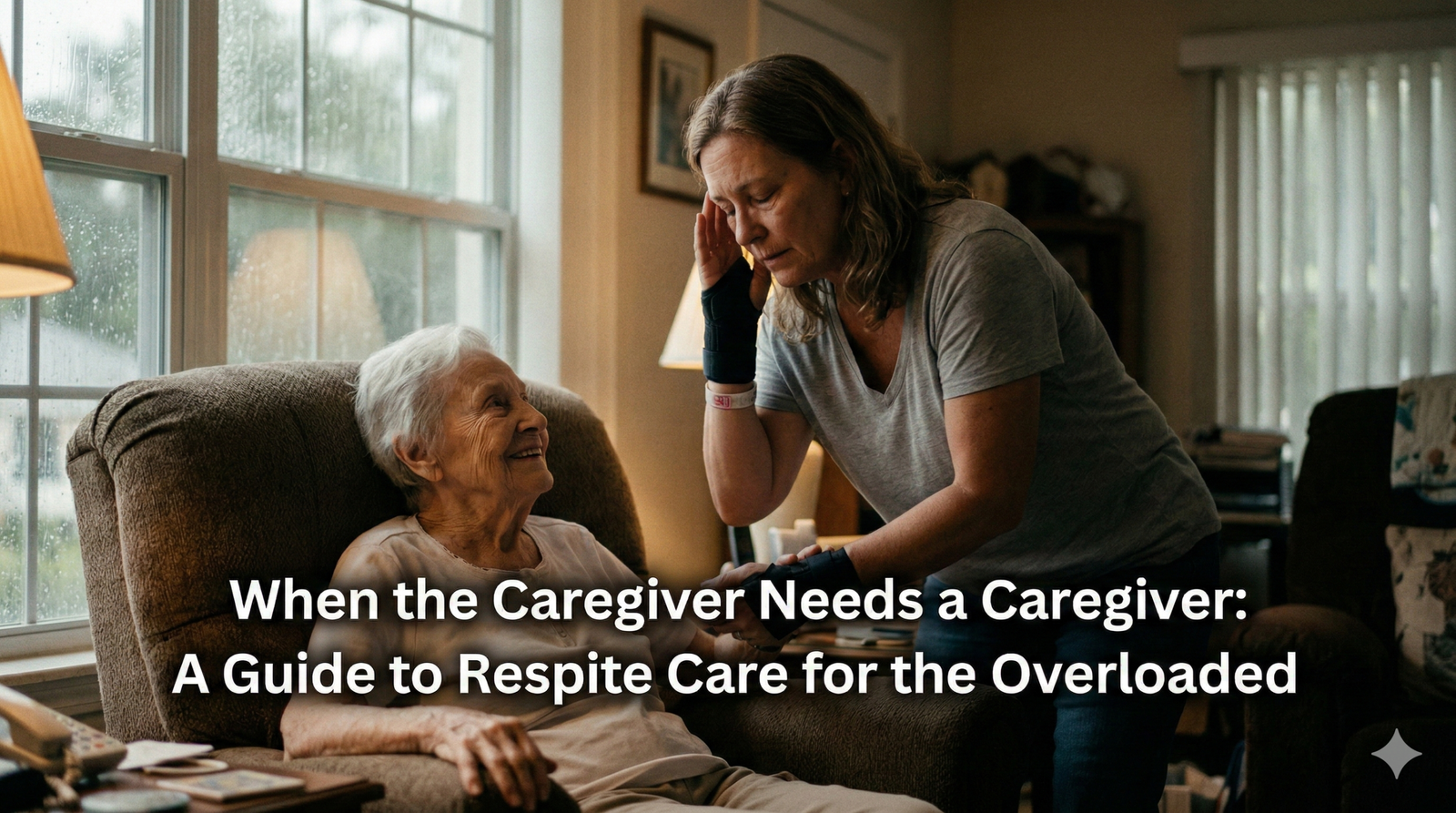
If you have MS and you are also caring for a loved one, you already know what it feels like to run on empty. You are managing your own symptoms, your own unpredictability, your own grief, while showing up every single day for someone else.
That is love. That is also unsustainable without support.
Respite Care exists to give caregivers a break. Not because you are weak. Because you are human.
TL/DR: Respite Care exists. It is funded. You qualify. Scroll down for the numbers to call, the words to say, and a free downloadable cheat sheet at the bottom. One phone call can change everything.
WHAT IS RESPITE CARE?
Respite Care is temporary, short-term relief for primary caregivers. It allows someone else to step in, trained aides, volunteers, or care facilities, so the caregiver can rest, recover, or simply breathe.
It can be a few hours a week or a longer stay. It can happen at home or at a facility. The point is simple: you cannot pour from an empty cup, and Respite Care is how you refill it.
WHAT DOES IT LOOK LIKE?
- In-home respite: A trained aide or volunteer comes to your home so you can step away
- Adult day programs: Your loved one attends a supervised program during the day
- Short-term residential care: Your loved one stays temporarily at a care facility
- Emergency respite: Short-notice care for crisis situations
THE HARDEST PART ISN’T FINDING IT. IT’S ALLOWING YOURSELF TO USE IT.
Most caregivers feel guilt about stepping back. Especially when the person they are caring for is a parent, a spouse, or someone they love deeply.
But here is the truth: when you burn out, everyone loses. Your loved one loses the best version of you. And you lose ground you may not get back, especially with MS in the picture.
Asking for help is not abandonment. It is strategy. It is self-preservation. It is how you keep going.
Now here is where to start. And before you pick up the phone, read this first.
WHAT TO SAY WHEN YOU CALL
This matters more than most people realize. When you contact any of these agencies, use these words:
“I am a family caregiver for someone with [Condition], and I am looking for Respite Care resources or vouchers to prevent caregiver burnout.”
The words “burnout” and “system failure” are not just descriptions. They are triggers. Many of these agencies have prioritization processes, and those words are what activate them. You are not being dramatic. You are speaking the language that gets results.
THIS IS NOT WELFARE. THIS IS GRID MANAGEMENT.
Let’s be clear about something.
Applying for a voucher or a grant is not charity. It is not weakness. It is not something to be ashamed of.
You are the Main Grid. You are the one keeping the whole household running. If you go down, everything goes dark. Your loved one loses their care. The system collapses.
Using a respite voucher or a grant to bring in a backup worker is not asking for a handout. It is preventing a total system failure. It is the same logic as having a generator. You do not wait until the power is already out to wish you had one.
These funds exist because lawmakers and agencies understand that caregiver collapse is expensive, painful, and preventable. You are not gaming the system. You are using it exactly the way it was designed to be used.
So apply. Without guilt. Without hesitation.
HOW TO PAY FOR YOUR BACKUP SUPPORT
- The National Family Caregiver Support Program (NFCSP)
This is the most common way to get help. In 2026, federal funding for this program was increased to $209 million to help families keep their loved ones at home longer.
How it works: This money is sent to your local Area Agency on Aging. They use it to pay for respite care, medical supplies, and even home modifications.
Cost: Often free or low cost based on a sliding scale.
Contact: Call the Eldercare Locator at 1-800-677-1116 to find your local office.
- Lifespan Respite Vouchers
On February 6, 2026, the Lifespan Respite Care Reauthorization Act was signed into law, extending this program through 2030.
How it works: Many states provide Respite Vouchers, usually between $300 and $1,000. You can use these to hire a professional or, in some states, even pay a trusted friend or neighbor to step in.
Cost: These are grants. You do not pay them back.
Contact: Visit archrespite.org/locator to find your state’s specific voucher application.
- The GUIDE Model (Medicare)
For those caring for a parent with dementia or Alzheimer’s, a new nationwide Medicare program called GUIDE is available in 2026.
How it works: Medicare now reimburses up to $2,500 annually specifically for respite services to give the primary caregiver a break.
Cost: Covered by Medicare for eligible patients.
Contact: Ask your parents’ doctor if they are a GUIDE participant, or visit the Medicare.gov provider search.
- VA Caregiver Support
If you are caring for a Veteran, the VA is your strongest ally.
How it works: The VA provides up to 30 days of respite care per year at no cost. This can be in-home help or a short stay at a VA facility.
Contact: Call the VA Caregiver Support Line at 1-855-260-3274.
THE CAREGIVER’S RESPITE CHECKLIST: YOUR BACKUP SUPPORT DIRECTORY
- NATIONAL SEARCH TOOLS (Start Here)
These tools help you find the specific boots on the ground in your own zip code.
ARCH National Respite Locator
The primary national database for finding respite providers and state programs.
https://archrespite.org/caregiver-resources/
703-256-2084
The Eldercare Locator
A public service that connects you to your local Area Agency on Aging. These local offices manage the actual grant money and vouchers in your city.
https://eldercare.acl.gov/home
1-800-677-1116
- SPECIALIZED GRANTS AND PROGRAMS
If you or your loved one fits these categories, you may have access to dedicated funding.
VA Caregiver Support Program
For those caring for a Veteran. Offers up to 30 days of respite care per year.
https://caregiver.va.gov/
1-855-260-3274 (Caregiver Support Line)
HFC (Hilarity for Charity) Recharge Grants
Provides 50 to 100 hours of professional in-home care for families facing Alzheimer’s or dementia, which often impacts our elderly parents.
https://grantsforseniors.org/
Lifespan Respite Vouchers
State-based vouchers for caregivers who don’t qualify for Medicaid but still need help. This program was recently reauthorized and expanded in February 2026.
How to apply: Contact your state’s Respite Coalition through the ARCH website above.
- THE HIDDEN 2026 RESOURCE
State Workforce Registries
A new 2026 initiative in many states allows you to hire pre-vetted neighbors or friends as your respite worker using state funds.
How to find it: Ask your local Area Agency on Aging if your state uses a Self-Directed Care model or a Workforce Registry.
Caring for a loved one is one of the highest honors we can have. But you cannot honor them if you are physically and mentally breaking down. You are not quitting by asking for respite care. You are performing a necessary system reboot so you can stay in the game for the long haul.
Go back to that checklist. Make one phone call today. Whether it is to the VA, a local agency, or a grant program, just start the process. Your system deserves the maintenance. And you deserve to be more than just a caretaker. You deserve to be you.
Stay brave. Stay managed.
You cannot manage the system if the operator is offline. Prioritize your maintenance.

Free Download: Caregiver Respite Cheat Sheet.
Every number. Every script. One page.